
Apply for Private Health Insurance in CT
Health Insurance, Private Plans, Connecticut Coverage
How to Apply for Private Health Insurance in Connecticut — Step‑by‑Step Guide
Learn how to compare private health insurance plans in Connecticut, understand coverage options, and apply with confidence while keeping costs and potential savings in mind.
1. Know What Private Health Insurance in Connecticut Covers
Before you apply for private health insurance in Connecticut, clarify the essentials. Most individual and family plans must cover key benefits — doctor visits, emergency care, hospitalization, prescription drugs, maternity, mental health services, preventive care. When you review plan details on a marketplace such as Private Health Insurance Marketplace, confirm that these core services are included and check whether there are limits, waiting periods, or referral requirements for specialists.
2. Gather Information You Need Before You Apply Online
A smooth application for private health insurance starts with preparation. Have the following details ready for every household member who needs coverage — full legal name, date of birth, address in Connecticut, contact information, current or recent health insurance status, preferred doctors or hospitals, and an estimate of your annual household income. This information helps online tools provide more accurate plan comparison results and potential savings estimates, especially if you are weighing different deductible and copay structures.
3. Compare Connecticut Private Health Insurance Plans Side by Side
Effective health insurance comparison goes beyond just the monthly premium. Use an online marketplace — including resources modeled after privatehealthinsurancemarketplace.com — to review multiple private plans available in your Connecticut ZIP code. Focus on a few key comparison points that directly affect cost and coverage quality.
Premiums and deductibles — Lower premiums often mean higher deductibles, so consider how much you can afford to pay upfront before coverage begins.
Copays and coinsurance — Review what you will pay for primary care visits, specialists, urgent care, and prescriptions under each private health insurance plan.
Provider networks — Confirm that your preferred doctors, hospitals, and clinics in Connecticut are in‑network to avoid higher out‑of‑pocket costs.
Prescription coverage — Check that your regular medications appear on the plan formulary and review any tiered pricing that may affect savings.
4. Evaluate Coverage Options Based on Your Health Needs and Budget
Private health insurance in Connecticut includes multiple coverage options — health maintenance organization (HMO) plans, preferred provider organization (PPO) plans, exclusive provider organization (EPO) plans, and high‑deductible health plans that can pair with a health savings account. When you review these options, match the plan design to your expected health care use. If you visit doctors frequently, a plan with higher premiums but lower copays may result in better long‑term savings. If you rarely need care, a higher deductible plan with a lower premium can be more cost‑effective while still protecting you from major medical expenses.
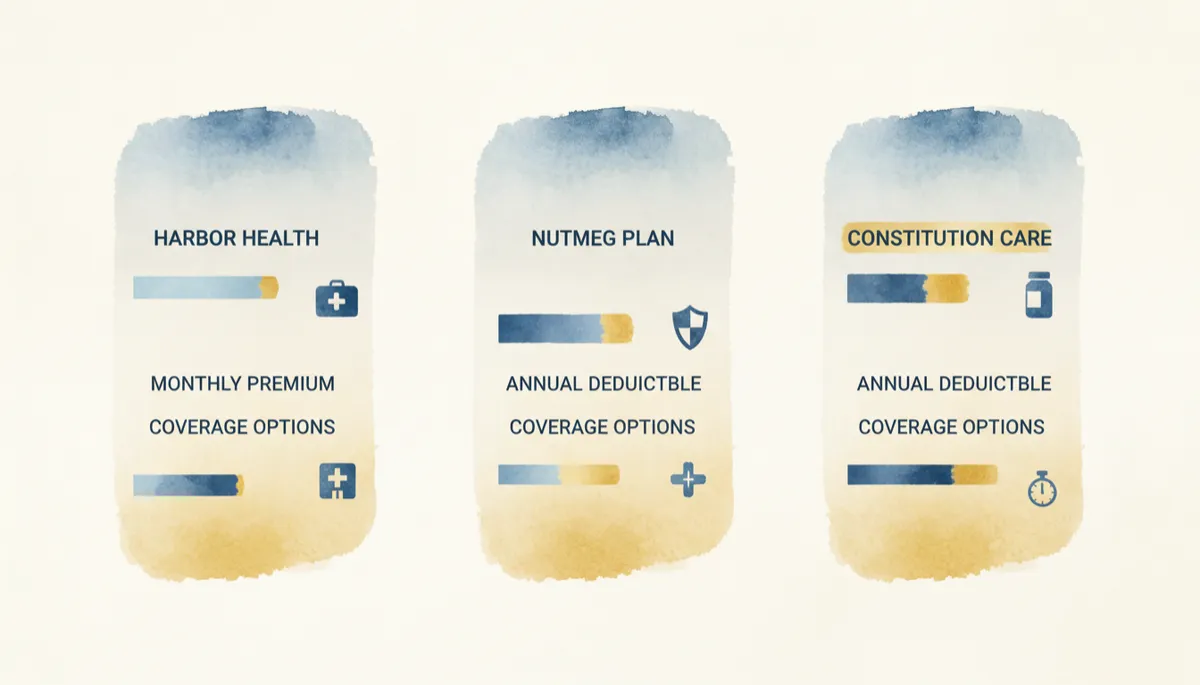
Comparing premiums, deductibles, and networks side by side can reveal meaningful long‑term savings.
5. Use Online Tools to Estimate Costs and Potential Savings
Many private health insurance marketplaces offer calculators that estimate your total yearly cost — premiums, deductibles, copays, and coinsurance combined. When you enter your Connecticut ZIP code, age, and household details, these tools highlight plans that balance affordable monthly payments with reliable coverage options. Look for features such as out‑of‑pocket maximum comparisons, prescription cost estimates, and side‑by‑side summaries. This data‑driven approach helps you identify potential savings without sacrificing essential benefits.
6. Complete Your Application for Connecticut Private Health Insurance
Once you have selected a plan, you can usually apply for private health insurance online in a few steps. Provide your personal information, answer eligibility questions, and review the summary of benefits and coverage carefully. Confirm your start date — in many cases, coverage begins on the first day of the following month. Before you submit, double‑check that all household members are listed correctly and that your contact details are accurate so the insurer can send your policy documents and ID cards without delay.
7. Review Your Policy Annually to Maintain Coverage and Savings
Health needs and budgets change — your private health insurance should evolve with them. Each year, review renewal notices, premium adjustments, and any updates to coverage options or provider networks in Connecticut. Use a marketplace resource, similar to Private Health Insurance Marketplace, to compare your current plan with new offerings. This annual comparison can uncover fresh opportunities for savings, improved benefits, or better alignment with your preferred doctors and hospitals, ensuring that your coverage remains both protective and cost‑effective.
